Archive for the ‘Uncategorized’ Category

h1

Dear John

November 28, 2015

As I’ve mentioned earlier it’s not privacy that the government should respect: it’s anonymity. Your public actions & speech can’t be private, of course, but the government should treat them anonymously (unless you’re committing a crime).

Here’s some nasty news about Los Angeles and its license plate database which is a wonderful illustration of why anonymity’s important.

Because who knows what the next politician or bureaucrat will come up with?

Los Angeles Just Proposed the Worst Use of License Plate Reader Data in History.

Last month, when I spoke on a panel called “Spying in Public: Policy and Practice” at the 25th Computers, Freedom and Privacy Conference in Washington, DC, we were embroiled in a discussion of license plate readers. As a law enforcement technologist, and a working police detective, I generally support the use of license plate readers. I discussed at the conference a child pornography case in which the suspect (now indicted) had fled the city and the police located him using the technology.

From the back of the room came the comment, “The issue is the potentially chilling effect that this technology has on freedom of association and freedom of transportation.”

That’s literally the phrase that leapt into my mind when I read the monumentally over-reaching idea posed by Nury Martinez, a 6th district Los Angeles city councilwoman, to access a database of license plates captured in certain places around the city, translate these license plates to obtain the name and address of each owner, and send to that owner a letter explaining that the vehicle was seen in, “an area known for prostitution.” […]

The Los Angeles City Council voted Wednesday to ask the office of the District Attorney for their help implementing the plan.

Have Ms. Martinez and the Los Angeles City Council taken leave of their senses? This scheme makes, literally, a state issue out of legal travel to arbitrary places deemed by some — but not by a court, and without due process — to be “related” to crime in general, not to any specific crime.

There isn’t “potential” for abuse here, this is a legislated abuse of technology that is already controversial when it’s used by police for the purpose of seeking stolen vehicles, tracking down fugitives and solving specific crimes. […]

All your license plate numbers are belong to them.

h1

Expensive insurance

November 21, 2015

Here’s an interesting post at Tyler Cowen’s Marginal Revolution:

Can this be true?

Between 1989 and 2010, U.S. attorneys seized an estimated $12.6 billion in asset forfeiture cases. The growth rate during that time averaged +19.4% annually. In 2010 alone, the value of assets seized grew by +52.8% from 2009 and was six times greater than the total for 1989. Then by 2014, that number had ballooned to roughly $4.5 billion for the year, making this 35% of the entire number of assets collected from 1989 to 2010 in a single year. According to the FBI, the total amount of goods stolen by criminals in 2014 burglary offenses suffered an estimated $3.9 billion in property losses. This means that the police are now taking more assets than the criminals [emphasis added].

That is from Martin Armstrong, via Noah Smith and Michael Hendrix. While private sector robberies are underreported by a considerable amount, this is nonetheless a startling contrast.

This seems to be the source for Cowen’s post.

I have no idea whether this is true. But if it is then police protection is turning into pretty expensive insurance, eh?

Via CoyoteBlog

h1

Another spoiler

September 16, 2015

I’ve dropped most of this op-ed in the quote below but if you want to know why Donald Trump is a blight on the political scene (for any party) read the whole thing. It’s brief and you don’t need to be a Republican to appreciate his points.

I think Mr. Gabriel puts his finger on the issue in his final line.

The Debate We Were Supposed to Have

The 2016 election was the grand battle conservatives had been hoping for since Ronald Reagan left the Oval Office. The roster of candidates was to be a who’s-who of smart, proven, center-right leadership. […]

It would be obvious to the electorate that Republicans were the only party with the vision, with the heart, and with the intelligence to lead the nation. […]

We aren’t discussing America’s $18.4 trillion national debt and our insolvent social programs. The stagnant economy and an expansionist China, Russia, and Islamic State. Burning cities at home and burning countries abroad.

Instead we’re trading GIFs of a reality show star on “The Tonight Show,” giggling about menstruation, and wondering if the most impressive GOP field in a generation are a bunch of “dummies” or if they’re a bunch of “losers.”

These are serious times. We are not a serious people.

It continues to amaze me how people continue to talk about Trump as though he were worthy of their time and consideration. Pfft!

h1

What he said (6)

September 1, 2015

I recently finished Michael Crichton’s novel State of Fear. It’s a little dated now, since it came out in late 2004, but I still found it an entertaining read. And that’s despite the fact that it’s not one of his better novels; it ain’t a patch on The Andromeda Strain, for example.

I won’t give anything away but it’s a story about how people perceive climate change and anthropogenic global warming.

At the end, Crichton wrote some end notes to explain his personal take on AGW. Among those were these comments that I liked.

I believe people are well intentioned. But I have great respect for the corrosive influence of bias, systematic distortions of thought, the power of rationalization, the guises of self-interest, and the inevitability of unintended consequences.

I am certain there is too much certainty in the world.

Before making expensive policy decisions on the basis of climate models, I think it is reasonable to require that those models predict future temperatures accurately for a period of ten years. Twenty would be better.

The hard-headed common sense of these remarks reminds me of things that Thomas Sowell has said.

h1

We can do without the knee-jerk outrage

July 24, 2015

From all the politicians reacting to Donald Trump’s idiotic remarks about immigrants. (May Trump emigrate to some place looking for a Fearless Leader. Please.)

Here’s an interesting article at FEE about a study of crime rates among immigrants by the National Criminal Justice Reference Service.

By the Numbers: Does Immigration Cause Crime?
The preponderance of research shows no effect

The alleged murder of Kate Steinle in San Francisco by illegal immigrant Juan Francisco Lopez-Sanchez has reignited the debate over the link between immigration and crime. Such debates often call for change in policy regarding the deportation or apprehension of illegal immigrants.

However, if policies should change, it should not be in reaction to a single tragic murder. It should be in response to careful research on whether immigrants actually boost the US crime rates.

With few exceptions, immigrants are less crime prone than natives or have no effect on crime rates. As described below, the research is fairly one-sided.

(Via Coyoteblog)

The Wall Street Journal has an editorial in a similar vein. I don’t know whether it cites the same study as the FEE article snce I’m not a subscriber.

Regular readers will recall that I think our immigration laws are too restrictive, not too lax. And in that vein, here’s a little visual snark:

Ancestors-n-immigrants

I can just imagine some 19th century Donald-Trump-like-idiot going on about my Irish great-great-grandfather.

(And for that matter, where the hell did Trump’s forebears immigrate from?)

h1

Bad forensics

April 25, 2015

Here’s an article from the Washington Post about problems with forensic hair analysis. Many folks have been pointing out the pseudo-scientific nature of hair analysis, bite-mark analysis, and the like. for some time now. It’s good to see it getting more attention.

FBI admits flaws in hair analysis over decades

The Justice Department and FBI have formally acknowledged that nearly every examiner in an elite FBI forensic unit gave flawed testimony in almost all trials in which they offered evidence against criminal defendants over more than a two-decade period before 2000.

Of 28 examiners with the FBI Laboratory’s microscopic hair comparison unit, 26 overstated forensic matches in ways that favored prosecutors in more than 95 percent of the 268 trials reviewed so far, according to the National Association of Criminal Defense Lawyers (NACDL) and the Innocence Project, which are assisting the government with the country’s largest post-conviction review of questioned forensic evidence.

The cases include those of 32 defendants sentenced to death. Of those, 14 have been executed or died in prison, the groups said under an agreement with the government to release results after the review of the first 200 convictions. […]

The State is not always or necessarily your protector.

H.T. Paul

h1

All your phone are belong to us

November 2, 2014

Paul sends links to two stories about a judge in Virginia who rules that fingerprint locks on phones aren’t protected by the Fifth Amendment but password locks are. He adds, "This is why NOT to use a fingerprint lock on your phone."

From The Wall Street Journal’s Digits blog:

Judge Rules Suspect Can Be Required To Unlock Phone With Fingerprint

A Virginia Circuit Court judge ruled Tuesday that police officers cannot force criminal suspects to divulge cellphone passwords, but they can force them to unlock the phone with a fingerprint scanner.

If applied by other courts, the ruling could become important as more device makers incorporate fingerprint readers that can be used as alternatives to passwords. Apple introduced the technology last year in its iPhone 5S and Samsung included it in its Galaxy S5.

When those phones arrived, lawyers said users might be required to unlock the phones with their fingerprints. More recently, Apple and Google said they had changed the encryption scheme on the newest phones using their operating systems so that law enforcement can’t retrieve the data. FBI Director James Comey criticized the companies, saying were allowing users to “place themselves above the law.”

The Fifth Amendment to the U.S. Constitution gives people the right to avoid self-incrimination. That includes divulging secret passwords, Judge Steven C. Frucci ruled. But providing fingerprints and other biometric information is considered outside the protection of the Fifth Amendment, the judge said.

And from MacRumors:

Court Rules Police Can Force Users to Unlock iPhones With Fingerprints, But Not Passcodes

A Circuit Court judge in Virginia has ruled that fingerprints are not protected by the Fifth Amendment, a decision that has clear privacy implications for fingerprint-protected devices like newer iPhones and iPads.

According to Judge Steven C. Fucci, while a criminal defendant can’t be compelled to hand over a passcode to police officers for the purpose of unlocking a cellular device, law enforcement officials can compel a defendant to give up a fingerprint.

The Fifth Amendment states that “no person shall be compelled in any criminal case to be a witness against himself,” which protects memorized information like passwords and passcodes, but it does not extend to fingerprints in the eyes of the law, as speculated by Wired last year.

Judge Steven C. Frucci ruled this week that giving police a fingerprint is akin to providing a DNA or handwriting sample or an actual key, which the law permits. A pass code, though, requires the defendant to divulge knowledge, which the law protects against, according to Frucci’s written opinion. […]

If Baust’s phone is an iPhone that’s equipped with Touch ID, it’s very likely that it will be passcode locked at this point and thus protected by law. Touch ID requires a passcode after 48 hours of disuse, a restart, or three failed fingerprint entry attempts, and the device has probably been in police custody for quite some time. It is unclear if the judge’s ruling will have an impact on future cases involving cellular devices protected with fingerprint sensors, as it could be overturned by an appeal or a higher court.

If you’re worried about your phone being searched, you should encrypt it.

How to Encrypt Your Android Phone and Why You Might Want To

Some recent legal rulings have suggested that encryption can protect against warantless searches. The California Supreme Court has ruled that police officers can lawfully search your cell phone without a warrant if it’s taken from you during arrest – but they would require a warrant if it was encrypted. A Canadian court has also ruled that phones can be searched without a warrant as long as they’re unencrypted.

h1

What he said (5)

September 24, 2014

A good essay about what science is and what it’s not. (The author’s emphasis below.)

How our botched understanding of ‘science’ ruins everything

Here’s one certain sign that something is very wrong with our collective mind: Everybody uses a word, but no one is clear on what the word actually means.

One of those words is “science.”

Everybody uses it. Science says this, science says that. You must vote for me because science. You must buy this because science. You must hate the folks over there because science.

Look, science is really important. And yet, who among us can easily provide a clear definition of the word “science” that matches the way people employ the term in everyday life?

So let me explain what science actually is. Science is the process through which we derive reliable predictive rules through controlled experimentation. That’s the science that gives us airplanes and flu vaccines and the Internet. But what almost everyone means when he or she says “science” is something different.

To most people, capital-S Science is the pursuit of capital-T Truth. It is a thing engaged in by people wearing lab coats and/or doing fancy math that nobody else understands. The reason capital-S Science gives us airplanes and flu vaccines is not because it is an incremental engineering process but because scientists are really smart people.

In other words — and this is the key thing — when people say “science”, what they really mean is magic or truth.

H.T. Jeff

h1

Be afraid (2)

April 7, 2014

Ars Technica has an article about who decides how to pursue those suspected of cybercrime. On the one hand, it seems like a procedural change.

On the other hand, it seems like a way empower even more intrusive surveillance by the government.

As usual, read it and decide for yourself.

Feds want an expanded ability to hack criminal suspects’ computers
Proposed rules to let one judge authorize “remote access” essentially anywhere.

The United States Department of Justice wants to broaden its ability to hack criminal suspects’ computers, according to a new legal proposal that was first published by The Wall Street Journal on Thursday. [March 27th]

If passed as currently drafted, federal authorities would gain an expanded ability to conduct “remote access” under a warrant against a target computer whose location is unknown or outside of a given judicial district. It would also apply in cases where that computer is part of a larger network of computers spread across multiple judicial districts. In the United States, federal warrants are issued by judges who serve one of the 94 federal judicial districts and are typically only valid for that particular jurisdiction.

The 402-page document entitled “Advisory Committee on Criminal Rules” is scheduled to be discussed at an upcoming Department of Justice (DOJ) meeting next month in New Orleans.

Federal agents have been known to use such tactics in past and ongoing cases: a Colorado federal magistrate judge approved sending malware to a suspect’s known e-mail address in 2012. But similar techniques have been rejected by other judges on Fourth Amendment grounds. If this rule revision were to be approved, it would standardize and expand federal agents’ ability to surveil a suspect and to exfiltrate data from a target computer regardless of where it is.
Peter Carr, a DOJ spokesperson, told Ars that he was “not aware of any figures” as to how many times such “remote access” by law enforcement has taken place.

Cracking Tor is hard!

Civil libertarians and legal experts are very concerned that this would unnecessarily expand government power.

“It is nuts,” Chris Soghoian, a technologist and senior policy analyst with the American Civil Liberties Union, told Ars.

“What’s most shocking is that they’re not going to Congress and asking for this authority. This is a pretty big shift. This is a dangerous direction for the government to go in, and if we’re going to go in that direction then we really need Congress to sign on the dotted line, and [the DOJ is] trying to sneak it through the back door.”

Carr told Ars that the change is needed to combat criminals who use “sophisticated anonymizing technologies,” like Tor.

“Our proposal would not authorize any searches or remote access not already authorized under current law,” he wrote by e-mail. “The proposal relates solely to venue for a warrant application.”

h1

Dangerous drones

March 22, 2014

A few weeks ago, Jeff sent a link to this video about a quadrotor drone equipped with a 100-round machine gun. It can also self-destruct, as you’ll see in the clip.

The video comes from FPSRussia, who’s been making videos about small arms for a few years now. (And has 5,000,000 subscribers to his YouTube channel.)

Jeff’s comment was, "Just because you’re paranoid doesn’t mean they’re not out get you."


Then today I ran across this hexarotor drone called CUPID via Gizmag.

http://www.youtube.com/watch?v=B0n-eoSNRQ8

That guy acting as the crash test dummy has an amazing confidence in technology, doesn’t he?

The comments for CUPID describe it this way.

Chaotic Moon built CUPID to raise awareness of technology that’s outpacing everything from regulatory agencies to social norms.

So now I’m wondering when I’ll see one of these or read about one of them being used here in the U.S.

h1

Voluntourism

February 25, 2014

Jeff sends a link to Pippa Biddle’s interesting essay about tourist volunteers.

THE PROBLEM WITH LITTLE WHITE GIRLS (AND BOYS): WHY I STOPPED BEING A VOLUNTOURIST

White people aren’t told that the color of their skin is a problem very often. We sail through police check points, don’t garner sideways glances in affluent neighborhoods, and are generally understood to be predispositioned for success based on a physical characteristic (the color of our skin) we have little control over beyond sunscreen and tanning oil.

After six years of working in and traveling through a number of different countries where white people are in the numerical minority, I’ve come to realize that there is one place being white is not only a hindrance, but negative –  most of the developing world.

In high school, I travelled (sic) to Tanzania as part of a school trip. There were 14 white girls, 1 black girl who, to her frustration, was called white by almost everyone we met in Tanzania, and a few teachers/chaperones. $3000 bought us a week at an orphanage, a half built library, and a few pickup soccer games, followed by a week long safari.

Our mission while at the orphanage was to build a library. Turns out that we, a group of highly educated private boarding school students were so bad at the most basic construction work that each night the men had to take down the structurally unsound bricks we had laid and rebuild the structure so that, when we woke up in the morning, we would be unaware of our failure. It is likely that this was a daily ritual. Us mixing cement and laying bricks for 6+ hours, them undoing our work after the sun set, re-laying the bricks, and then acting as if nothing had happened so that the cycle could continue.

Basically, we failed at the sole purpose of our being there. It would have been more cost effective, stimulative of the local economy, and efficient for the orphanage to take our money and hire locals to do the work, but there we were trying to build straight walls without a level. […]

My wife once saw something similar years back when she accompanied one of our sons to Mexico, where he was part of a volunteer team to build a house. He was in the sixth grade at the time, so 10 or 11 years old. The project was to build a small, rectangular building with a pitched roof that was partitioned into two rooms. I believe its floor area was 300 – 400 square feet.

How much do the vast majority of school children know about building roof trusses? Very little, of course. But luckily there were people on hand who could fix the problems due to using unskilled children as carpenters. Since then I’ve always suspected that many of these efforts are frequently the triumph of good intentions over good sense.

Ms. Biddle concludes her essay with these words.

Before you sign up for a volunteer trip anywhere in the world this summer, consider whether you possess the skill set necessary for that trip to be successful. If yes, awesome. If not, it might be a good idea to reconsider your trip. Sadly, taking part in international aid where you aren’t particularly helpful is not benign. It’s detrimental. It slows down positive growth and perpetuates the “white savior” complex that, for hundreds of years, has haunted both the countries we are trying to ‘save’ and our (more recently) own psyches.

h1

The fire next door

February 23, 2014

I’ve been making my way through Ted Carpenter’s book The Fire Next Door. (If you follow that link, you’ll see that Mr. Carpenter is a Senior Fellow at the Cato Institute.)

The premises of the book are that:

(a) the US drug prohibitions are creating chaos in Mexico,
(b) this civil chaos is likely to cross the border into the United States, and
(c) drug prohibition should be repealed to de-fund the violent Mexican drug cartels.

The leaders of the Mexican drug cartels — the "drug lords" — have become wealthy from the black market profits due to prohibition. And they very reasonably have used their wealth to corrupt the Mexican police, Mexican prosecutors, and the Mexican military (when it’s been involved in drug law enforcement). The Spanish phrase Carpenter mentions repeatedly is plata o plomo, meaning "silver or lead". The drug cartels give police and prosecutors the choice of taking a bribe or taking a bullet, in other words.

Carpenter cites one case of a hardy Mexican prosecutor who refused the bribe and has avoided the bullet (so far). But the man had to relocate his family to the US to keep them from becoming pawns in his struggle with the cartels.


It gets worse. While the Mexican government denies it, Carpenter claims that the government has lost control of parts of Mexico where the cartel leaders have become de facto regional governments. Independent news report support Carpenter’s view. Here’s an article about that which appeared in the Wall Street Journal five years ago.

This loss of civil law enforcement has led to the rise of Mexican vigilante groups who fight the drug cartels on their own because the Mexican police don’t support them. Here’s a photo essay that appeared last month at Business Insider.

Intense Photos Of Mexican Vigilantes Battling A Drug Cartel For City Control

Mexico has long suffered blistering violence and crime at the hands of its homegrown drug cartels.

Though the Mexican government has waged war on the cartels, the effort has struggled to go anywhere. More than 90,000 people have died in the ongoing conflict.

Fed up with a corrupt police force that is often in bed with the cartels and a military that has to this point been ineffective, some Mexicans have taken it upon themselves to fight the cartels and protect their families — with an incredible conflict happening this week in the city of Paracuaro. […]

Over the last year, vigilante groups, known as fuerzas autodefensas have sprung up all over Mexico, particularly in the southwestern state of Michoacan, an area plagued by the Knights Templar cartel.

Here’s a picture I ran across recently of a Mexican vigilante (in the adelita tradition). Abuela, ¿qué tal?

Female Mexican vigilante


Yesterday the New York Times reported the arrest of El Chapo at Mazatlan. It’s a good article to get up to speed on the topic, if this is news to you.

El Chapo, Most-Wanted Drug Lord, Is Captured in Mexico

MEXICO CITY — Just before 7 a.m. on Saturday, dozens of soldiers and police officers descended on a condominium tower in Mazatlán, Mexico, a beach resort known as much as a hangout for drug traffickers as for its seafood and surf.

The forces were following yet another tip about the whereabouts of one of the world’s most wanted drug kingpins, Joaquín Guzmán Loera — known as El Chapo, which means “Shorty” — who had eluded such raids for 13 years since escaping from prison, by many accounts in a laundry cart. With an army of guards and lethally enforced loyalty, he reigned over a worldwide, multibillion-dollar drug empire that supplied much of the cocaine and marijuana to the United States despite a widespread, yearslong manhunt by American and Mexican forces. […]

Mexican marines and the police, aided by information from the United States Drug Enforcement Administration, immigration and customs officials and the United States Marshals Service, took him into custody without firing a shot, according to Mexican officials. […]

Mr. Guzmán faces a slew of drug trafficking and organized crime charges in the United States, which had offered $5 million for information leading to his arrest in the hopes of dealing a crippling blow to an organization that is the country’s top provider of illicit drugs.

Mr. Guzmán’s Sinaloa Cartel is considered the largest and most powerful trafficking organization in the world, with a reach as far as Europe and Asia, and has been a main combatant in a spasm of violence that has left tens of thousands dead in Mexico.

“Big strike,” said a Twitter posting by former President Felipe Calderón, who had made cracking down on drug gangs a hallmark of his tenure.

Note the involvement of the U.S. DEA and "American forces". The U.S. has agreements with Mexico to assist in the enforcement of drug prohibition laws. Also note that the DEA wants Mr. Guzmán for breaking U.S. laws.


It will be interesting to see the effects of this arrest. Mr. Carpenter documents in The Fire Next Door that the violence in Mexico usually increases when a drug lord is arrested. This happens because the leadership of a very profitable drug cartel is up for grabs and different factions will fight in the streets to claim it.

Is it not enough that drug prohibition has made war zones out of some of America’s inner cities, has created a whole gangsta sub-culture, and has given us a prison population that dwarfs that of most other countries?

Must we imperil our Central American neighbors with our prohibition policies too?

End the War on Drugs.

This seems like a good place for this video from the Drug Policy Alliance.

h1

A real WTF moment

February 9, 2014

I have no idea what went on in this story, but I have to wonder if the CHP officer felt that Mr. Gregoir wasn’t respecting his authoritah.

http://www.youtube.com/watch?v=D0dbpXSywDg

The story (and video) via The Blaze.

‘Ridiculous’: How a Firefighter Ended Up in Handcuffs While Helping Victims at Scene of Serious Car Accident

While responding to a Tuesday night rollover accident in Chula Vista, Calif., a police officer and firefighter got into a dispute over where the fire engine should park. It ended with the uniformed firefighter in handcuffs.

The California Highway Patrol officer reportedly ordered the firefighter, identified as Jacob Gregoir, to move the fire engine off the center divide or he would be arrested. As he worked the scene and checked the overturned car for more victims, he reportedly told the unidentified officer that he would have to check with his captain.

That’s when the officer decided to detain the firefighter instead.

According to UT San Diego, Gregoir — a fire service veteran of more than 12 years — parked the truck behind an ambulance to provide protection to the emergency responders from oncoming traffic. This is apparently a standard safety procedure fire crews are taught.

h1

Fourth Amendment dissed yet again

November 19, 2013

Paul sends a link to this story from station KXAS in Dallas-Fort Worth. There’s video at the site (which starts with an obnoxious, unavoidable 10-second ad).

North Texas Drivers Stopped at Roadblock Asked for Saliva, Blood

Some drivers in North Fort Worth on Friday were stopped at police roadblock and directed into a parking lot, where they were asked by federal contractors for samples of their breath, saliva and even blood. The request was part of a government research study aimed at determining the number of drunken or drug-impaired drivers.

Some drivers along a busy Fort Worth street on Friday were stopped at a police roadblock and directed into a parking lot, where they were asked by federal contractors for samples of their breath, saliva and even blood.

It was part of a government research study aimed at determining the number of drunken or drug-impaired drivers.

“It just doesn’t seem right that you can be forced off the road when you’re not doing anything wrong,” said Kim Cope, who said she was on her lunch break when she was forced to pull over at the roadblock on Beach Street in North Fort Worth.

The National Highway Traffic Safety Administration, which is spending $7.9 million on the survey over three years, said participation was “100 percent voluntary” and anonymous.

But Cope said it didn’t feel voluntary to her — despite signs saying it was.

“I gestured to the guy in front that I just wanted to go straight, but he wouldn’t let me and forced me into a parking spot,” she said.

I understand why Ms Cope didn’t tell these folks to take their ‘voluntary participation’ and stuff it. But how great would it have been if she had?

Remember to ask: Am I being detained?

h1

When injustice becomes law (2)

September 26, 2013

Paul B. sent me this picture of a house in his neighborhood; it’s just a couple of blocks from his house. The quote at the top is attributed (apparently wrongly) to Jefferson. (Click for a larger view.)

It was an odd coincidence that Paul sent this the day before I learned about Terry Dehko becoming a victim of los Federales and their civil forfeiture laws.

Sign-in-Eureka-Mo

This isn’t the first sign to appear at that house. The odd part is that there’s a police cruiser from the St. Louis County Police Dept. frequently parked at that house. Naturally, we’ve speculated that a County policeman lives there. But since we don’t know the residents, that’s just a guess. Maybe the policeman is only a frequent visitor or a close relative.

h1

Heh

June 24, 2012

The Obama Event Registry idea is so sketchy that it has its own Snopes page.

Via Instapundit

Further chuckles: Nick Gillespie has 5 Great Gifts to Send Obama in Lieu of Cash Contributions

h1

Not quite the DMV in Pennsylvania

September 3, 2011

This is a bit of follow-up to my Not quite the DMV post, which was about visiting a state-run liquor store in Iowa in the 70s.

Jacob Sullum asked an amusing question this week at Reason’s blog about Pennsylvania’s fumbling attempts to update how wine is sold there.

How Does a Wine Monopoly Lose Money?

In a report issued today, Pennsylvania Auditor General Jack Wagner says the state liquor control board’s wine vending machines, a wonderful illustration of what happens when a government monopoly tries to act more like a business, are operating at a loss, costing taxpayers more than $1 million since they were introduced a year ago. “We think the wine kiosk program has failed,” Wagner said at a press conference, “and it needs dramatic, radical changes if the program is going to continue to exist.” […]

When they are working, the kiosks dispense a limited selection of wines at limited locations and times (not on Sunday, of course!) to customers who present ID, look into a camera monitored by a state employee, breathe into a blood-alcohol meter, and swipe a credit card. The Pennsylvania Liquor Control Board (PLCB) originally expected to have 100 kiosks in grocery stores throughout the state, each selling 30 to 50 bottles a day. But only 32 machines were ever up and running at one time, and only 15 manged to hit the bottom end of that sales target.

The Reason article does not say that all wine sold in Pennsylvania is sold through these kiosk machines. The kiosks are placed in stores that aren’t operated by the state. Hence all the nonsense about ID, camera monitoring and breathalyzer testing. Can you believe all that? The state-employee-monitored camera is a nice touch, isn’t it? Straight out of 1984.

Gee, I wonder why they’re not selling much wine? Want to bet on how many repeat customers the kiosk machines get? I wouldn’t use them twice.

There are state-run stores, though, where wine is sold. Here’s an amusing rant by Rob Dreher about them: Why I hate buying wine in PA.

So I doubt that Pennsylvania is losing money selling wine when sales from its state-run stores are considered.

h1

It looks like John Barlow was right

July 29, 2011

In the week following 9-11, I came across a message John Perry Barlow had sent to his friends, assuring them that he was OK. (He’d been in New York City during the attack, I believe.) In that message, he went on to mention that he thought the police state in America would only get more oppressive as a result of the attack on the Twin Towers.

At the time, I thought his prediction was probably right: things would get more oppressive. But I thought his calling America a ‘police state’ was a little over the top.

In the intervening years, I seem to have come across more and more cases like the one below. Maybe it’s because I’ve been reading Radley Balko’s The Agitator and he often documents police and prosecutors’ abuses — with a special focus on what he calls puppycide. (That’s one of his many posts on the topic.)

Balko did a paper called Overkill a few years back, when he was at the Cato Institute, which is all about the militarization of police forces in the U.S.

Or maybe it’s that I’ve seen too many St. Louis County patrolmen walking around in fatigues and paratrooper boots. It’s not all that rare to run into one of them at the local QuikTrip where I buy coffee. It makes me wonder: when did Missouri turn into Franco’s Spain?

So the sad tale below — about a 135-pound homeless man who was beaten to death by police — isn’t much of a surprise now. And I’ve had to re-evaluate Mr. Barlow’s remarks ten years ago. He was right in one way or the other: we may have been living a police state then but, even if not, it seems we are now.

Homeless Man Dies After Being Brutally Beaten by Five Fullerton Cops

Kelly Thomas’ father, a retired Orange County police officer, did not recognize his own son when he went watch him die at the UC Irvine Medical Center after police beat him into a coma on July 5. The officers were responding to a call about vandalized cars when they found Thomas, a homeless schizophrenic, and attempted to search him

Images and video at the link. They’re not pretty; in fact, they’re pretty disgusting.

h1

Put up or shut up

November 8, 2010

The more I hear from New Jersey governor Chris Christie, the more I like him.

Governor Awesome,” as TigerHawk calls him.

h1

About last Tuesday

November 7, 2010

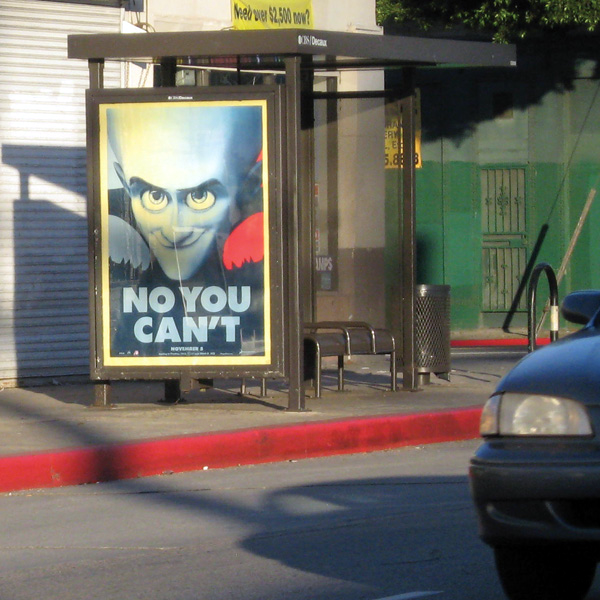
No you can't

Via Hit & Run